
If you’re buying a property in Boston, understanding the difference between a Homeowners Association (HOA) and a Condo Association is essential. These two types of communities come with very different rules, fees, and maintenance responsibilities.
Whether you’re a first-time buyer, investor, or homeowner, this guide breaks down the key differences—so you can make an informed decision.
Key Differences at a Glance
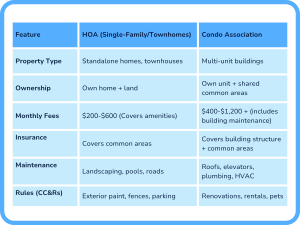
Source: Mass.gov Condo Laws | Boston Zoning Codes
🧱1. Ownership & Responsibilities
HOA (Homeowners Association)
- Common in suburbs and townhome neighborhoods (e.g., South Boston)
- You own the structure and land
- The HOA maintains shared amenities like pools, parks, and sidewalks
Condo Buildings:
- Found in urban areas like Back Bay, Seaport, and Fenway
- You own only the interior walls of your unit
- The condo association maintains the building exterior, roof, plumbing, and elevators
✅ Key Takeaway: Condo fees are higher—but cover more building maintenance.
💰 2. Monthly Fees & What They Include

Typical HOA Fees in Boston:
💵 $200–$600/month
Includes:
- Landscaping
- Snow/trash removal
- Shared amenities (if applicable)
Typical Condo Fees in Boston:
💵 $400–$1,200+/month
Includes:
- Building insurance
- Elevator + hallway maintenance
- Reserve fund contributions
Note:Luxury condos in the Seaport can exceed $2,000/month.
📜 3. Rules, Restrictions & Governance

HOAs Often Regulate:
- Exterior paint colors and siding materials
- Fence height and design
- Parking policies (e.g., no RVs or boats)
Condo Associations Often Control:
- Interior renovations (plumbing, flooring)
- Rental limits (e.g., only 30% of units can be rented)
- Pet policies (weight, breed restrictions)
🧠 Legal Tip: Always review the Master Deed and Bylaws before purchasing.
💸 4. Special Assessments & Financial Health

Both HOAs and Condo Associations can issue special assessments to cover large, unplanned expenses—like roof replacements or HVAC overhauls.
🛡 How to Protect Yourself:
- Ask about the reserve fund — it should cover 10–30% of total property value
- Review meeting minutes — see if major repairs or fee hikes are coming
- Check for lawsuits — legal issues can cause major budget problems
🔗 Resource: Massachusetts HOA Laws
🤔 Which Is Right for You?
Choose an HOA if you want:
✅ More privacy (yard, driveway)
✅ Lower monthly fees
✅ Freedom to change your exterior
Choose a Condo if you prefer:
✅ Low-maintenance living (no snow shoveling!)
✅ City amenities (gym, doorman, elevator)
✅ Built-in community atmosphere
🧰 How a Property Manager Helps
Managing HOA or condo requirements can be confusing. At Greater Boston Property Management, we help by:
✅ Explaining documents in plain English
✅ Handling disputes and board communication
✅ Managing dues, repairs, and seasonal upkeep
Still Not Sure Which One Fits You Best?
📞 Book a free consultation today—we’ll review your association documents, explain your responsibilities, and help you avoid costly surprises.