Food Safety Habits That Prevent Kitchen Disasters | Home Safety Tips
Food Safety Habits That Prevent Kitchen Disasters | Home Safety Tips
Why Food Safety Is a Home Safety Issue
Food safety isn’t just about health, it plays a major role in preventing fires, bacterial growth, plumbing issues, and pest infestations.For landlords, unsafe food handling by tenants can lead to:
Pest infestations
Mold and bacteria in shared kitchens
Clogged pipes from grease or food scraps
Odor complaints affecting other units
Fire hazards from improper thawing or heating
This final part of the series helps homeowners and tenants build safe kitchen habits that reduce risks and protect your property.
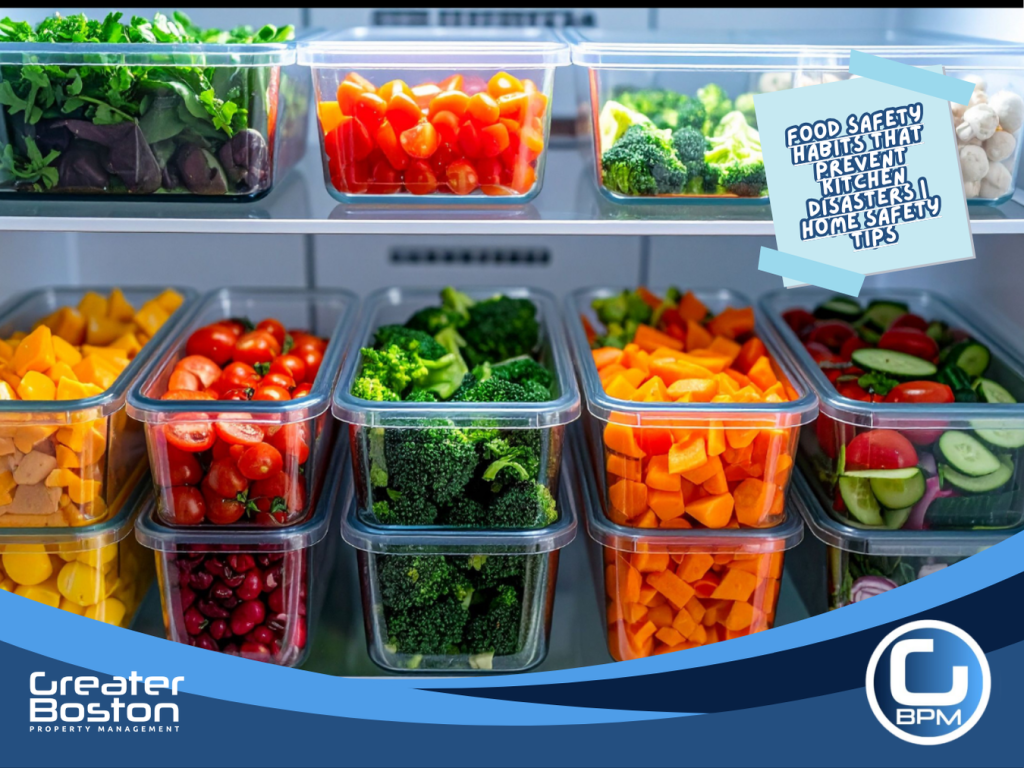
Food stored incorrectly can spoil quickly, leak onto shelves, attract pests, or cause illness.
Safe Storage Habits:
☐ Store raw meats on the bottom shelf to avoid cross-contamination ☐ Keep leftovers in sealed containers ☐ Discard expired items weekly ☐ Don’t overload fridge shelves (blocks airflow) ☐ Label leftovers with dates
3. Keep Prep Surfaces Clean to Prevent Bacteria Growth
Cross-contamination is one of the largest contributors to kitchen-related illness.
Cleaning rules to follow:
☐ Sanitize counters before & after food prep ☐ Use separate cutting boards for meat and produce ☐ Replace cutting boards that are deeply scratched ☐ Wash hands for 20 seconds before handling food ☐ Clean knives immediately after cutting raw meat
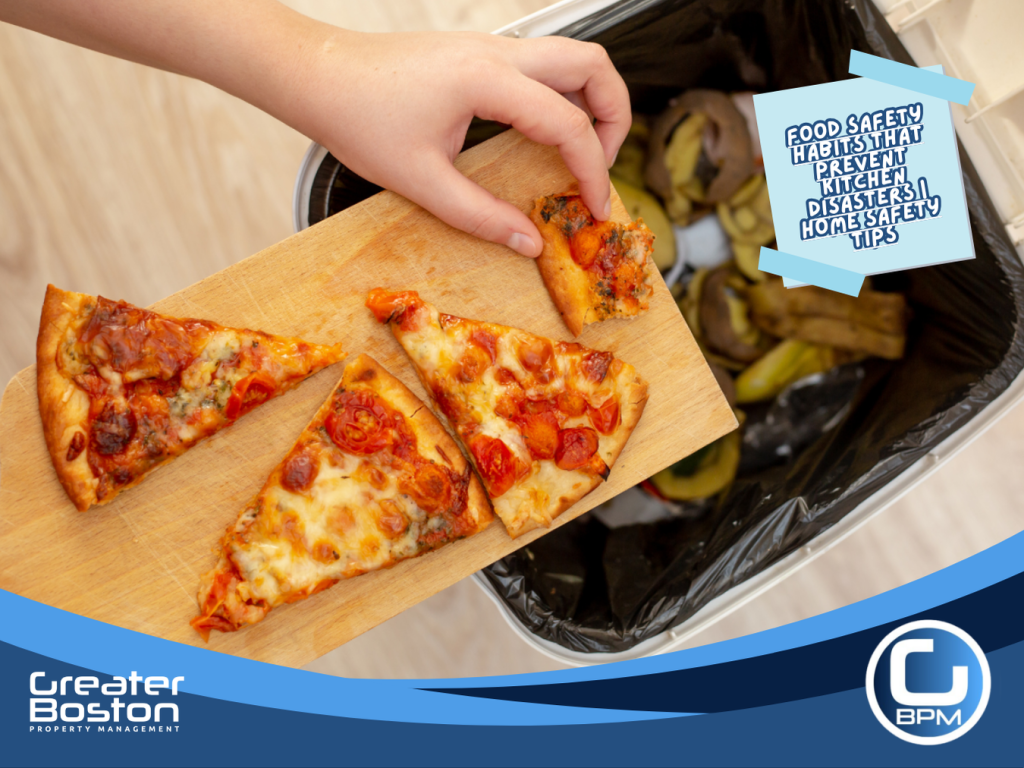
Improper disposal causes clogs, odors, drain backups, and pest infestations.
Safe disposal:
☐ Scrape plates before washing ☐ Never pour grease down the drain ☐ Use sink strainers to catch food scraps ☐ Keep trash sealed and emptied regularly ☐ Keep compost in a ventilated container
7. Food Safety Measures That Prevent Pest Infestations
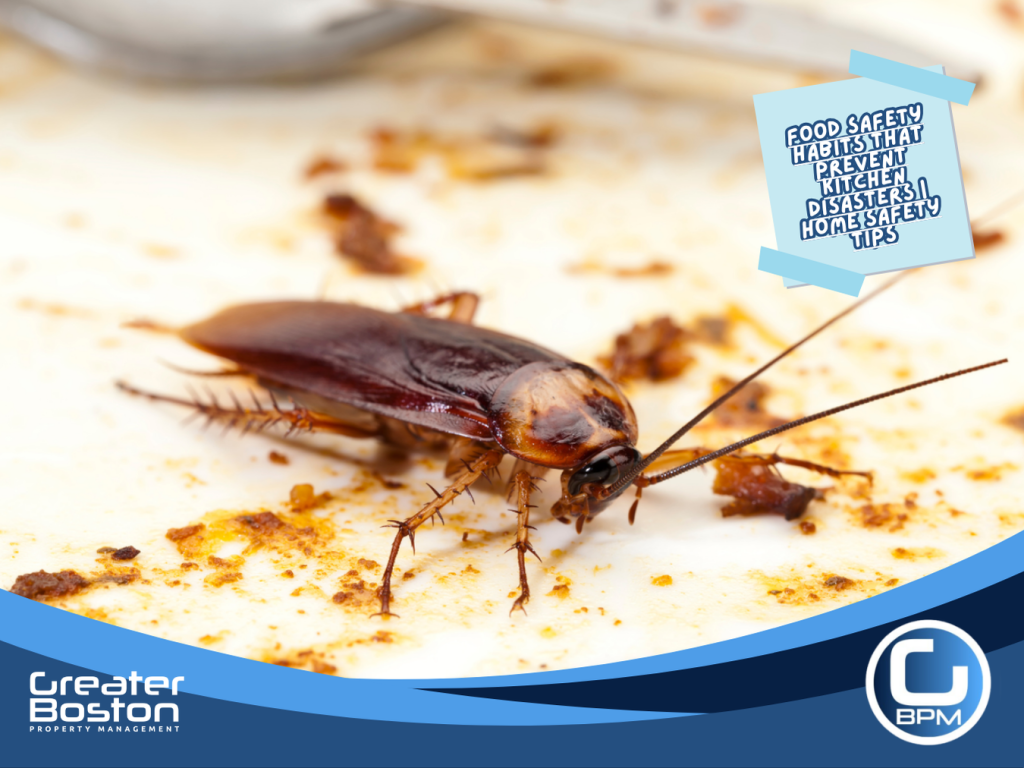
Food waste, open containers, and crumbs attract ants, mice, roaches, and pantry pests.
Prevent pests with simple habits:
☐ Wipe spills immediately ☐ Seal cereal, rice, flour, and pasta ☐ Clean under appliances quarterly ☐ Don’t leave food out overnight ☐ Use airtight pantry containers