Ice Dams: What Landlords Need to Know | Prevention, Damage & Removal

Ice Dams: What Landlords Need to Know | Prevention, Damage & Removal

When heat escapes through the roof, snow melts and refreezes at the roof edge. This creates a barrier that traps water behind it. That trapped water can leak under shingles and into:

  • Ceilings
  • Walls
  • Insulation
  • Electrical systems
  • Tenant living spaces

For landlords, this can mean:

  • Emergency interior water damage repairs
  • Mold remediation
  • Insurance claims
  • Tenant displacement
  • Long-term structural issues


Prevention is far more affordable than repair.

Download: Ice Dam Inspection & Prevention Guide (PDF)
Related Blog: Winter Property Maintenance Checklist for Landlords & Homeowners


1. How Ice Dams Form

Ice dams occur due to three main factors:

  1. Heat Loss From the Attic
    -Warm air rises and escapes through the roof.
  2. Uneven Roof Temperatures
    -Snow melts on warm sections and refreezes at colder edges.
  3. Poor Insulation & Ventilation
    -Improper airflow traps heat inside the attic.


Massachusetts homes with older insulation are especially vulnerable.


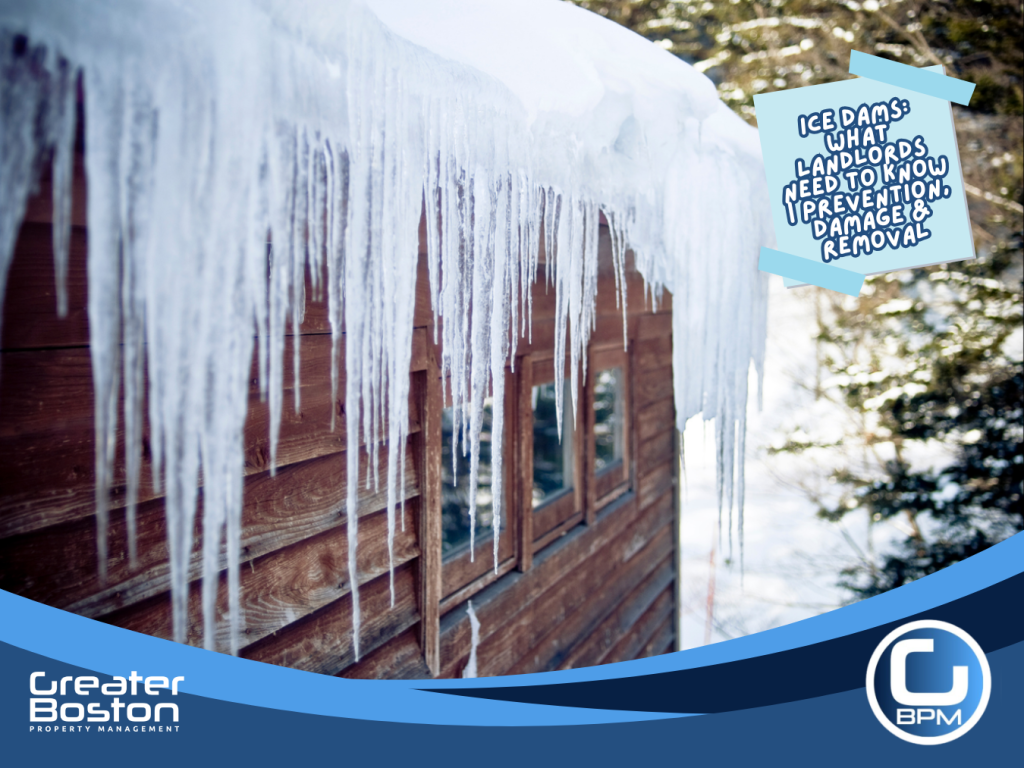
Long icicles forming along a snow-covered roof edge, early warning signs of ice dams on rental property.


2. Early Warning Signs of Ice Dams

Catching ice dams early can prevent major interior damage.

Watch for:

☐ Large icicles forming along roof edges
☐ Thick ice buildup at gutters
☐ Water stains on ceilings or walls
☐ Peeling paint near roofline
☐ Damp insulation in attic
☐ Sagging gutters

If you see these signs, act quickly.


Proper attic insulation and ventilation system to prevent ice dams in rental property during winter.

3. Ice Dam Prevention Strategies

✔ Improve Attic Insulation

☐ Ensure attic insulation meets recommended R-value
☐ Seal attic floor air leaks
☐ Insulate attic access panels
☐ Seal gaps around pipes and vents

✔ Improve Roof Ventilation

☐ Check soffit vents are not blocked
☐ Ensure ridge vents are functioning
☐ Remove insulation blocking airflow
☐ Maintain balanced intake and exhaust ventilation

Proper airflow keeps roof temperatures consistent.

✔ Reduce Snow Accumulation

☐ Use a roof rake after heavy snowfall
☐ Remove snow safely from ground level
☐ Keep gutters clear before winter
☐ Ensure downspouts are not blocked

Never climb onto an icy roof.


4. What NOT to Do

  • Do not chip ice with tools
  • Do not use open flames
  • Do not pour hot water on the roof
  • Do not pressure wash ice

Improper removal can damage shingles and create leaks.


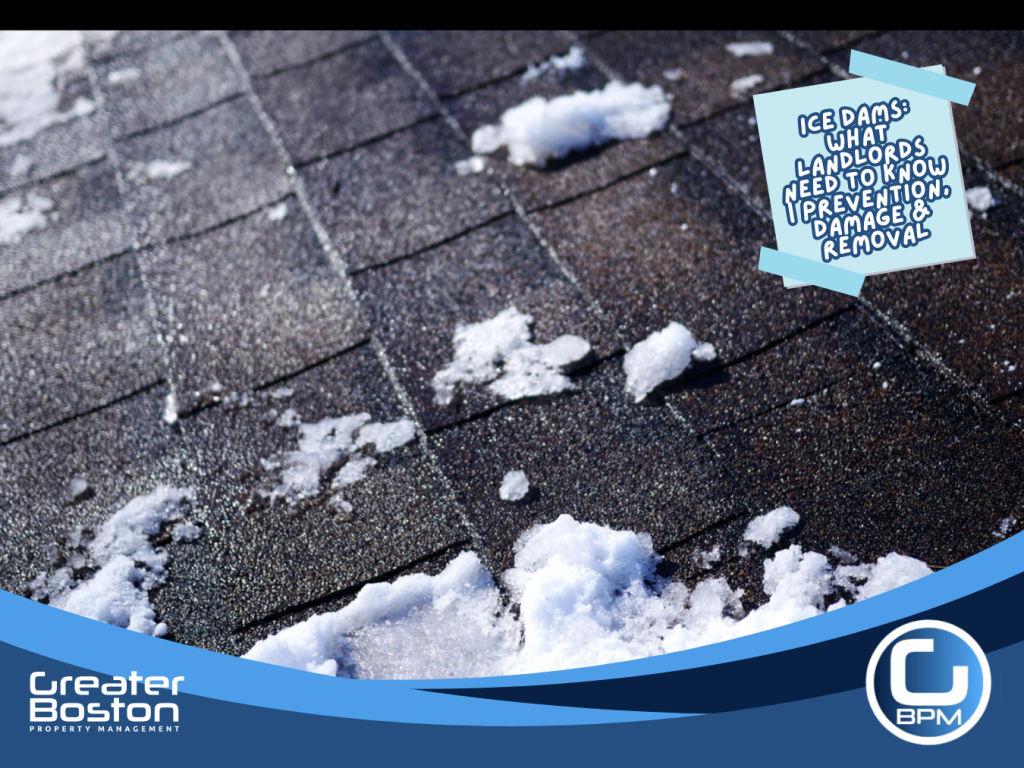
Snow and ice buildup on asphalt roof shingles showing developing ice dam on rental property.

5. Safe Ice Dam Removal Options

If ice dams are already forming:

✔ Temporary Relief

☐ Create drainage channels using calcium chloride ice melt (not rock salt)
☐ Place ice melt in socks to create melting paths

✔ Professional Removal

☐ Hire a licensed contractor
☐ Use steam removal (preferred method)
☐ Document damage for insurance

Professional steam removal minimizes roof damage.


6. Insurance Considerations for Landlords

Before winter begins:

☐ Review your insurance policy
☐ Confirm coverage for ice dam water damage
☐ Document roof condition with photos
☐ Keep maintenance logs updated

Related Download: Property Maintenance Log Template (Excel)


7. Landlord Responsibilities

Landlords should:

☐ Monitor roof conditions during heavy snow
☐ Schedule seasonal roof inspections
☐ Maintain gutters and downspouts
☐ Educate tenants on reporting leaks immediately
☐ Respond quickly to water intrusion

Related Resource: Tenant Water Damage Reporting Sheet (PDF)


8. Tenant Responsibilities

Tenants should:

☐ Report ceiling stains immediately
☐ Report icicle buildup or unusual dripping
☐ Avoid attempting roof snow removal
☐ Report interior drafts or attic cold spots

Clear communication prevents costly delays.


Ice Dam Prevention Takeaways

✔ Improve insulation and ventilation
✔ Remove snow safely from ground level
✔ Monitor roof edges during thaw cycles
✔ Respond immediately to leaks
✔ Document and log maintenance

Massachusetts winters are unpredictable, preparation is key.


Legal Disclaimer

This guide is for informational purposes only. Always comply with local building codes, safety regulations, and insurance requirements.


Up Next in the Series (Part 5):

“Snow & Ice Removal Rules Every Landlord Should Know (Massachusetts Edition)”

Connect With Our Team!


What are you looking for?