
Why Snow Removal Matters for Massachusetts Landlords
Snow and ice removal is not just a maintenance task, it’s a legal and safety responsibility in Massachusetts.
Failure to properly remove snow and ice can lead to:
- Slip-and-fall injuries
- Tenant complaints and disputes
- Legal liability
- Insurance claims
- Municipal fines
Massachusetts winters often bring heavy snowstorms and freezing rain, making winter maintenance essential for landlords and homeowners.
Download: Snow Removal Responsibility Sheet (PDF)
Related Blog: Winter Property Maintenance Checklist for Landlords & Homeowners
Massachusetts Snow Removal Laws for Landlords
Massachusetts property owners must maintain reasonably safe premises for tenants and visitors. Under Massachusetts premises liability law, landlords may be responsible if unsafe snow or ice conditions cause injury.
Key legal references:
- Massachusetts Premises Liability Law
- Massachusetts General Law (Defects in Public Ways)
- Massachusetts Property Owner Liability Overview
Failure to maintain safe walkways may result in civil liability claims if someone is injured due to negligence.
Boston Snow Removal Requirements
Cities and towns enforce their own snow removal rules. In Boston, property owners must clear sidewalks adjacent to their property.
Official Boston rules:
https://www.mass.gov/info-details/massachusetts-law-about-snow-and-ice
Boston sidewalk clearing requirements:
✔ Sidewalks must be cleared within 3 hours after snowfall stops during daytime hours
✔ Overnight snowfall must be cleared by 11:00 AM the next morning
✔ Snow must not be shoveled into streets or storm drains
Failure to comply may result in fines from the City of Boston.
Boston sidewalk snow removal fines:

Landlord vs Tenant Snow Removal Responsibilities
Responsibilities depend on property type and lease agreements.
Multi-Unit Properties
For most multi-unit rental buildings, landlords are responsible for clearing:
☐ Shared walkways
☐ Entryways and exits
☐ Parking lots
☐ Shared driveways
☐ Emergency exits
Massachusetts courts often view these areas as landlord-controlled spaces.
Single-Family Rentals
Snow removal duties can sometimes be assigned to tenants through a written lease agreement. However, landlords should still ensure that conditions remain reasonably safe.
Tenants may be responsible for:
☐ Clearing driveways
☐ Clearing private walkways
☐ Applying ice melt
Common Liability Risks
Snow and ice create one of the largest winter liability risks for landlords.
High-risk areas include:
☐ Front walkways
☐ Exterior stairs
☐ Parking lots
☐ Mailbox access paths
☐ Entryways
☐ Emergency exits
Slip-and-fall accidents are among the most common premises liability lawsuits in winter.
Related Resource: Home Safety Inspection Log Template
Ice Melt & Snow Removal Best Practices
Safe Snow Removal Tips
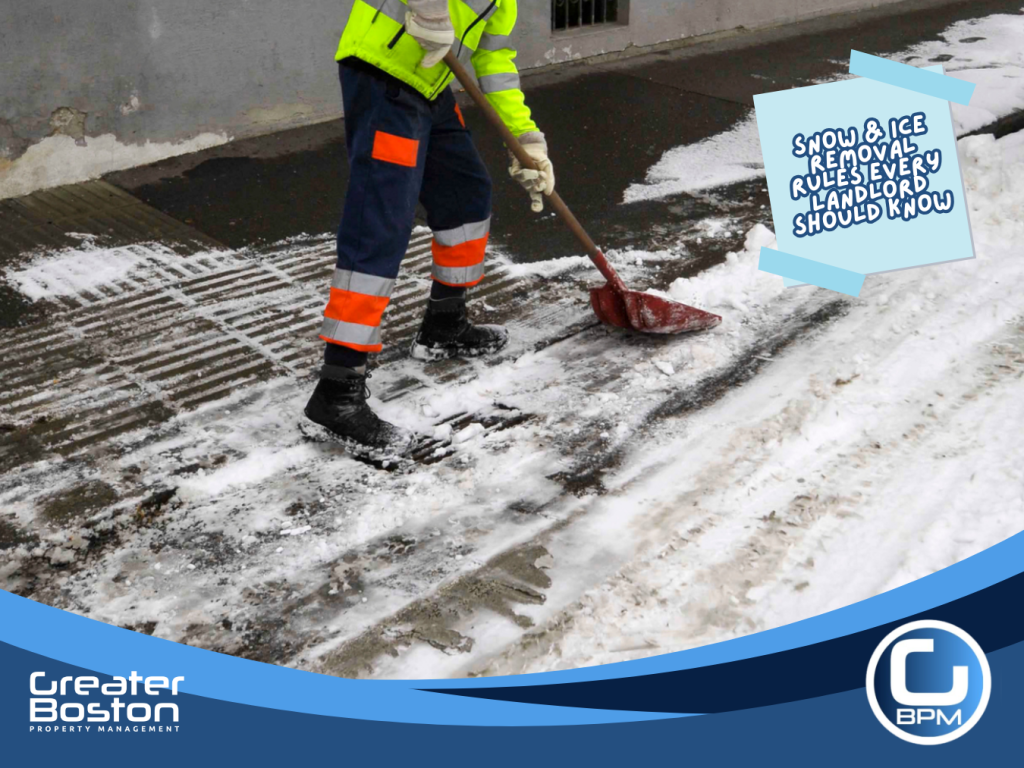
☐ Clear snow early and often
☐ Shovel before snow compacts into ice
☐ Apply ice melt after clearing
☐ Use sand for traction on icy surfaces
☐ Keep exits and fire access routes clear
Choosing the Right Ice Melt
✔ Calcium chloride — works in extreme cold
✔ Magnesium chloride — safer for pets and concrete
✔ Sand — improves traction without chemical damage
Recommended: Pet-Safe Ice Melt
Hiring Snow Removal Contractors
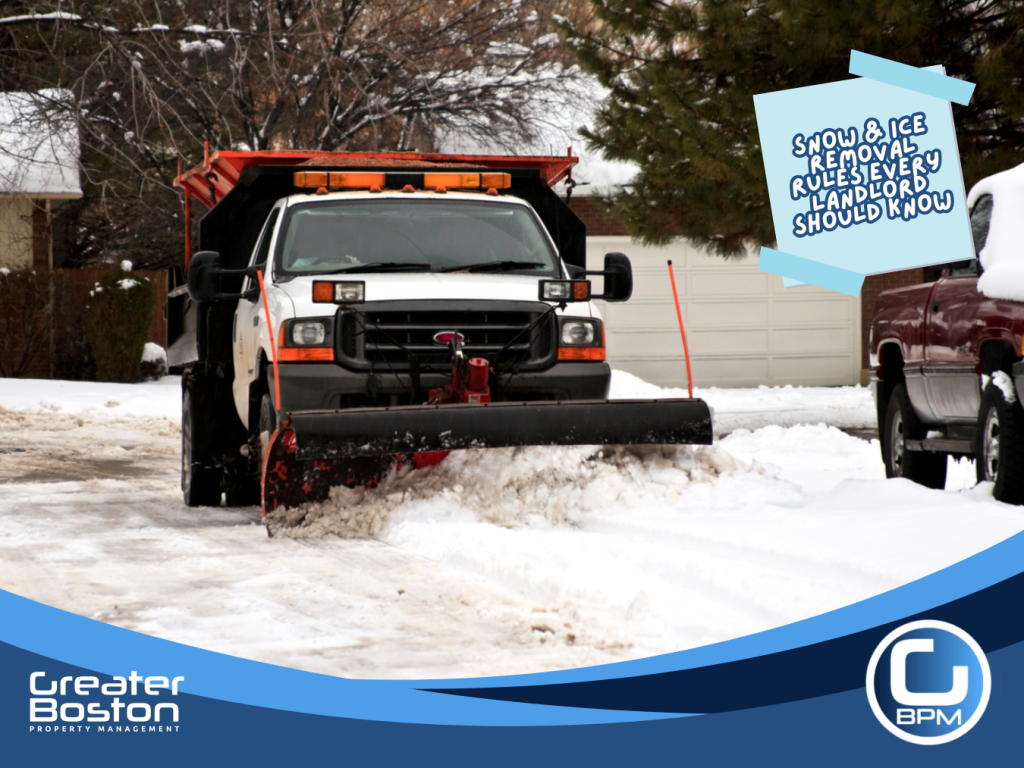
Many landlords hire professional snow removal services.
Before hiring a contractor:
☐ Verify contractor insurance
☐ Confirm snow removal response time
☐ Request written service agreement
☐ Confirm emergency storm coverage
☐ Document snow removal service logs
Related Resource: Property Maintenance Log Template (Excel)
Communicating Snow Removal Rules to Tenants
Clear communication prevents disputes.
Landlords should provide tenants with:
☐ Snow removal expectations
☐ Parking rules during plowing
☐ Instructions for reporting icy conditions
☐ Emergency contact information
Download: Snow Removal Responsibility Sheet (PDF)
Winter Snow Removal Safety Takeaways
✔ Clear snow promptly after storms
✔ Maintain safe access routes
✔ Apply ice melt during freeze-thaw cycles
✔ Document snow removal activity
✔ Follow local municipal requirements
Massachusetts winters are unpredictable, preparation protects both tenants and landlords.
Legal Disclaimer
This guide provides general information and should not replace local regulations or legal advice. Always verify snow removal requirements for your municipality.
Outbound Authority Links
Next in the Series (Part 6)
Winterizing Your Rental Property for Energy Efficiency | Save Money & Prevent Damage